
The impact of HOPE
How we helped our island ʻohana thrive in Fiscal Year 2020
1,731
people received help avoiding or overcoming homelessness
769
individuals were sheltered
578
children were helped into housing
4,793
hours given by volunteers
The Reality of Homelessness in Hawai’i
On every island in Hawaiʻi families are sleeping in tents on the beaches, tucked away in the lava, and camped in public parks. Parents experiencing homelessness work full time jobs while children do their homework by flashlight – in cars parked in Hawaii’s towns and cities. Many of our elderly have to decide between medication or food at the grocery store, and the mentally ill of our state are left with little choice but to sleep outside. Homelessness in Hawaii is a growing epidemic, and these statistics are heartbreaking.
How we are helping
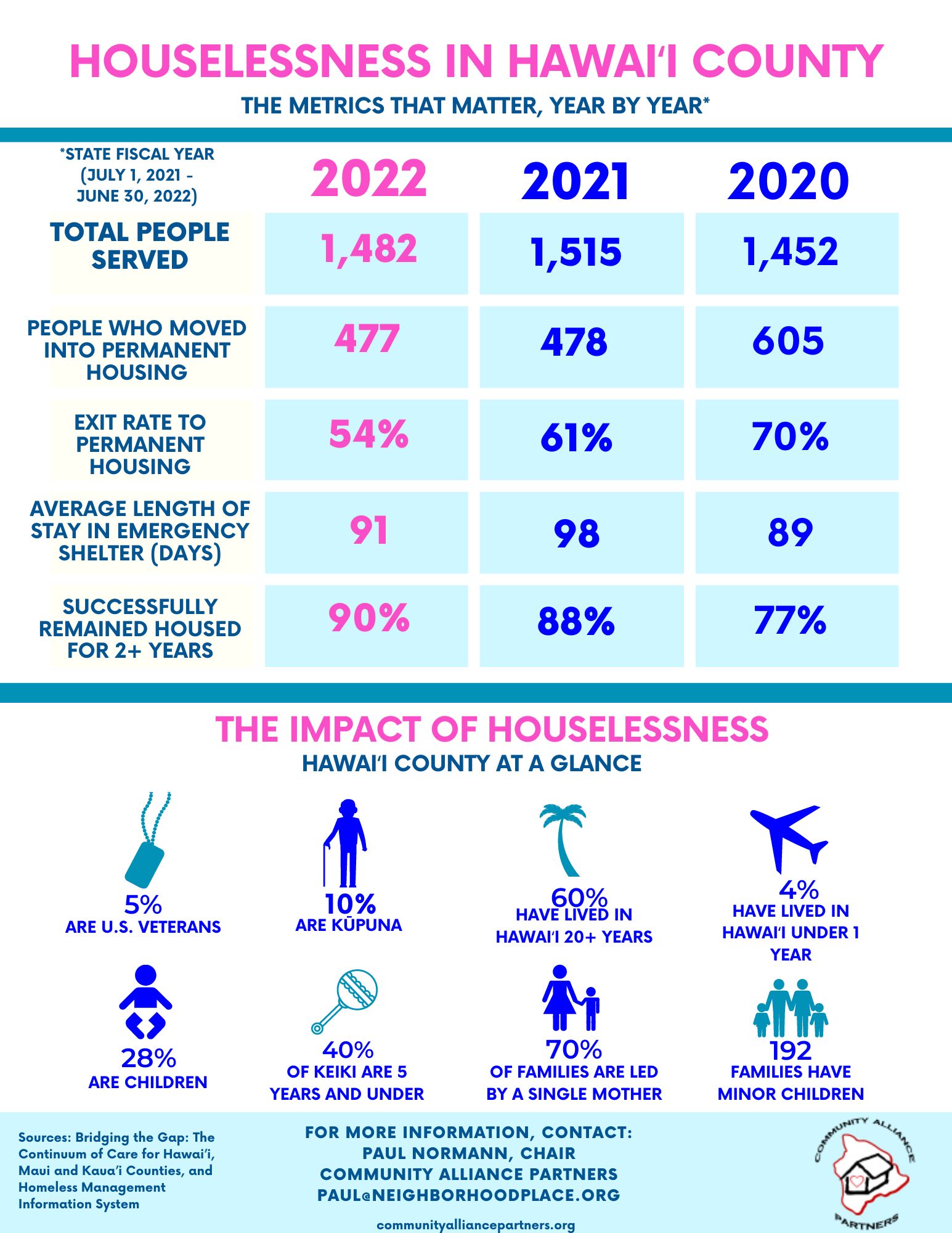
Homelessness on Hawaiʻi Island
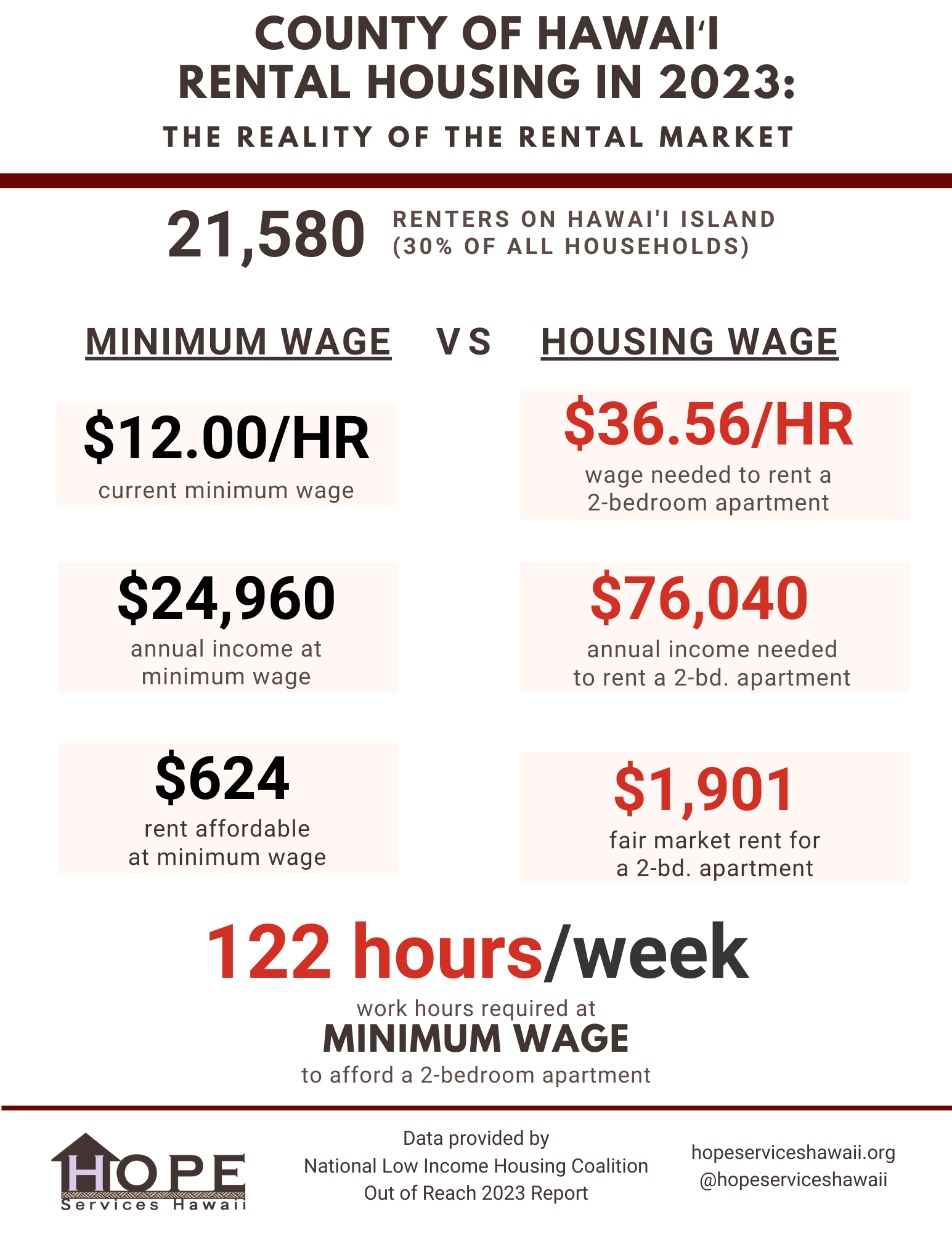
The Reality of the rental market
Bridging the Gap (Hawai’i, Maui, and Kaua’i Continuum of Care)
Statewide and individual county data (Hawai’i, Maui, Kaua’i, Honolulu)
HOPE Services Program Flyers
What we accomplished in Fiscal Year 2021
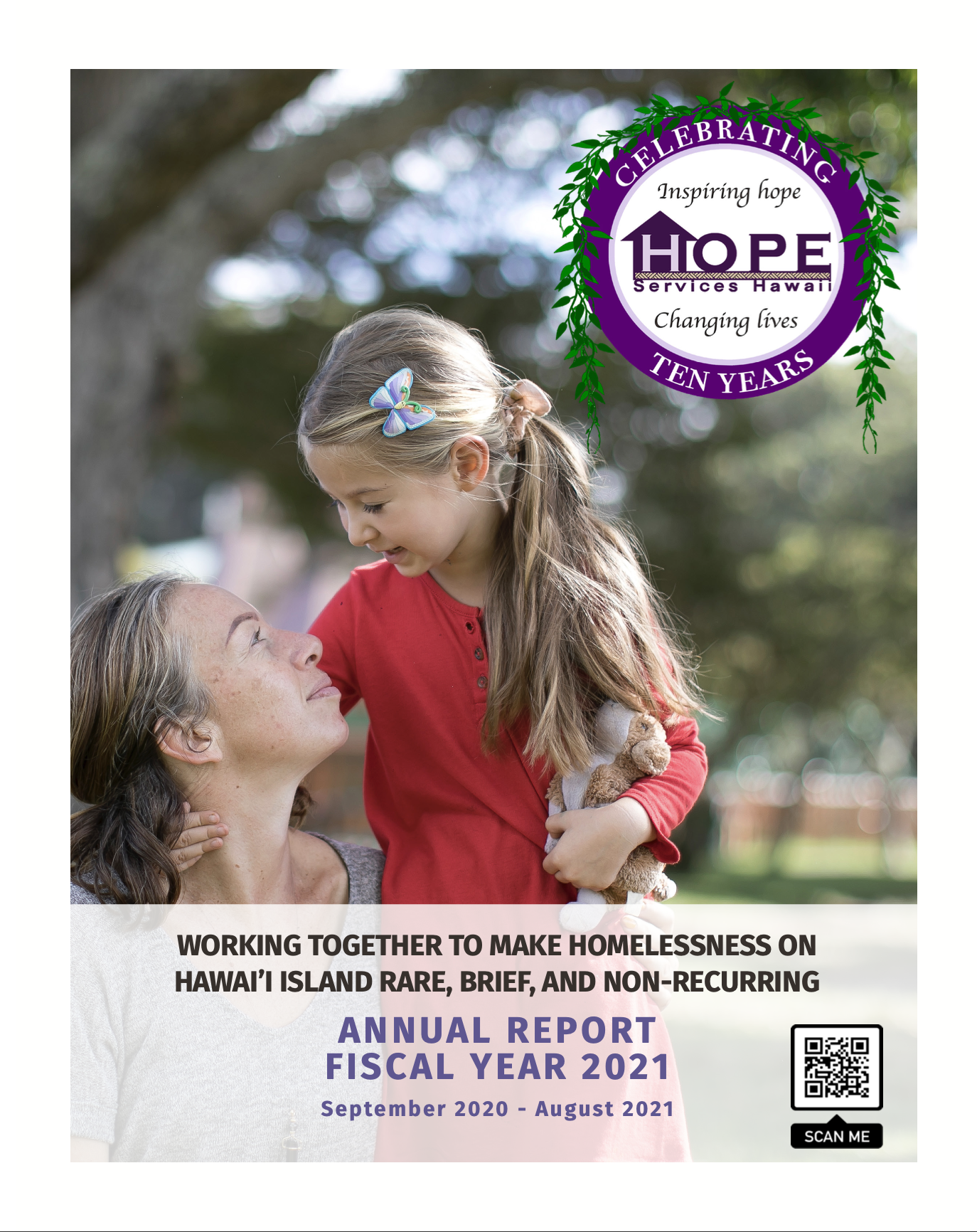
Fiscal Year 2020
Fiscal Year 2019
Fiscal Year 2018
Annual Report designed by Daniella Kamei
TAKE ACTION
“Share your story. I believe that is the #1 way to drive the message home.”
Susan, formerly homeless Hawaiʻi Island resident